
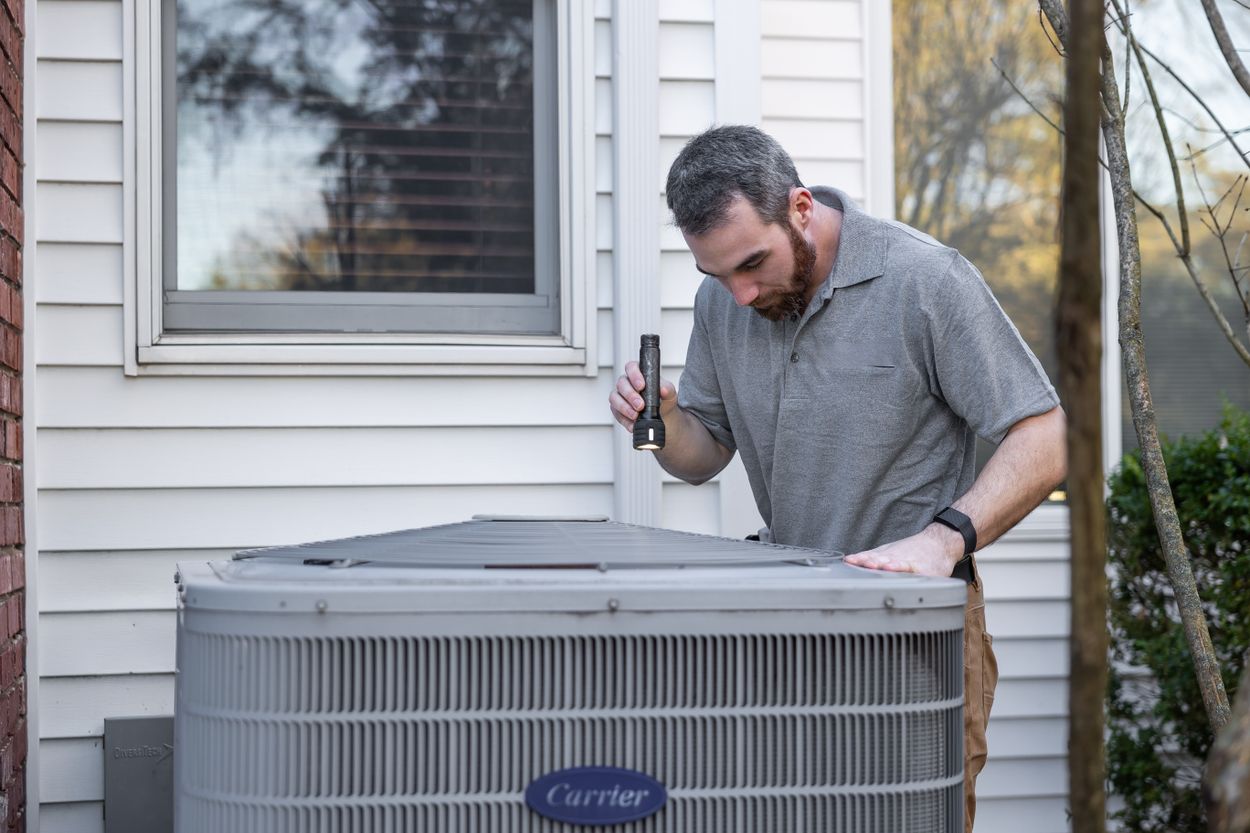
A lot of HVAC companies treat Meta ads like a flyer on a windshield. They post a photo of the truck, add a line about fast and friendly service, put some money behind it and wait for the phone to ring. When it stays quiet, the verdict is usually that Facebook and Instagram do not work for HVAC.
Most of the time, the platform is not the problem. The message is.
Homeowners on Facebook and Instagram are not looking for an HVAC company. They are scrolling past friends, news and videos. Your ad has a moment to make the right person stop, a little longer to make them care, and then it has to tell them exactly what to do. The script is what handles all three. It also shapes who Meta shows the ad to next, because the system learns from the people who respond.
That puts the script near the top of the list of things that decide how the campaign does. It deserves more than a few lines scribbled the night before filming.
Table of Contents
- Your Script Is Doing the Selling
- Open With What the Homeowner Feels Right Now
- Show You Know Why It Is Happening
- Point to One Clear Next Step
- The Words Shape Who Meta Shows It To
- A Simple Structure for a Short Video
- Talk About Their Home, Not Your Company
- Proof That Feels Real
- Write Once, Run It All Year
- Before You Hit Record
Your Script Is Doing the Selling
On Meta, the video is the salesperson. Nobody is standing next to it to explain what you meant. If the opening does not land, the rest goes unseen. If the middle does not build trust, the offer at the end does not matter. If the close is vague, interested people scroll on and forget you.
A good HVAC script does three jobs in order. It gets the right homeowner to stop, it makes the problem feel familiar, and it connects that problem to one clear next step with your company.
Open With What the Homeowner Feels Right Now
The first line is where most ads win or lose. People are not opening Facebook to watch ads, so your opening has to break the scroll with something they recognize from their own house.
HVAC has an advantage here, because the problems are physical and seasonal. A bedroom upstairs that never cools down. An AC that runs all afternoon while the house stays sticky. A furnace that bangs when it kicks on. A power bill that jumped for no clear reason. Lead with the feeling, not the equipment.
Compare two openings. A weak one: "Looking for a reliable HVAC company?" Nobody has that thought while scrolling, so nobody stops. A stronger one: "If your upstairs bedrooms never cool down, even with the AC running all day, here is what is usually going on."
The second version names a specific problem, speaks to a specific homeowner and promises an answer. It also gives Meta something useful. The people who stop and watch are homeowners with a cooling problem, which is exactly the kind of person you want the ad to find next.
Show You Know Why It Is Happening
Once someone stops, they want proof that you understand their problem before they hear anything about your company. Too many ads jump straight to the pitch: years in business, brands carried, financing available. None of that matters yet.
Next, spell out the problem in plain words. Why one room stays hot. Why an older system struggles on the hottest days. Why a clogged filter or a dirty coil makes the unit work harder. Keep it simple enough that a homeowner could repeat it at dinner that night.
This is where a good technician on camera is worth more than any graphic. A short clip of your tech pointing at an iced up line or a dirty coil and saying what it means builds more trust than a list of features ever will.
Teaching in an ad does something a sales line cannot. It makes your company look like the one that knows what it is doing, and it gives people grounds to trust you before the phone ever rings. That is the gap between sounding like an expert and sounding like every other truck in town.
Point to One Clear Next Step
After the problem and the explanation, the script has to connect to what you actually offer. Keep it practical. The goal is not to list every service you have. The goal is to make the next step feel easy and obvious.
Instead of "We do heating and cooling," say something like "We will check the whole system, show you what we find, and tell you straight whether it needs a repair or just a cleaning." That paints a picture of the visit and takes away the fear of being sold something.
Then say exactly what to tap: call now, book a visit, or send a message. One action, said out loud and shown on screen.
The Words Shape Who Meta Shows It To
Every view, pause, tap, comment and message is feedback. Meta uses those signals to decide who sees your ad next. If the script is broad, the people who respond are broad, and delivery drifts toward people who will never book. If the script is specific, the right homeowners respond and the system has better examples to follow.
In other words, your script is part of your targeting. It sorts the audience before anyone ever books.
The people who watch, tap and message tell Meta who to find next. Write for the homeowner you want more of.
A Simple Structure for a Short Video
An HVAC video ad should move quickly. Every line needs a job, and nothing should be there just to fill time. That does not mean rushing. It means cutting anything a homeowner would skip.
For most short videos, this order works well:
- A first line that names the problem
- The reason it keeps happening
- Your tech doing the fix on a real job
- Why your company and not the next truck
- A reason to book this week
- Exactly what to tap
It works because it follows the way people decide. First they notice the problem. Then they understand it. Then they trust the person explaining it. Then they act.
Talk About Their Home, Not Your Company
Plenty of contractor ads are mostly about the contractor: the logo, the fleet, the years in business, the brands on the trucks. Those things can matter later, but they are not why someone stops scrolling.
Make the homeowner the subject. What is happening in their house? What fixes have they tried so far? What are they afraid it will cost? What do they want back: a cool bedroom, a quiet furnace, a normal bill?
When the script answers those questions, the ad feels like it was made for them, and that is when people call.
Proof That Feels Real
Proof does not have to be a polished testimonial. Real footage from real jobs is proof: your crew in uniform, your truck in a driveway, a clean install, a coil before and after a cleaning. People can tell a stock clip from your own work.
Never make up a testimonial, a number or a result. One honest clip of your tech explaining a problem does more for trust than any claim you cannot back up.
Write Once, Run It All Year
A good script is more than one video. The same idea can become a shorter cut for stories, a section on your website, a post on your Google Business Profile and a talking point for whoever answers your phone.
HVAC runs on a calendar, so plan for it. Write a cooling version for the first hot weeks, a heating version for the first cold snap, and a tune up version for the mild months in between.
When the ads, the website and the person on the phone all say the same thing, homeowners hear one clear message instead of three different ones.
Before You Hit Record
Read the script out loud before you film it. If a line sounds like an ad, rewrite it until it sounds like your best tech talking to a homeowner in their kitchen.
Check that the first line names a real problem, the middle explains it, and the end tells people exactly what to do. Then film it on a real job, not in front of a backdrop.
Meta Ads are one of the extra services MapClimb offers next to Local SEO, along with Google Ads and Google Local Services Ads. If you want help planning ads around your busy seasons, we are happy to talk it through.